Energy Control in Radiofrequency Blepharoplasty
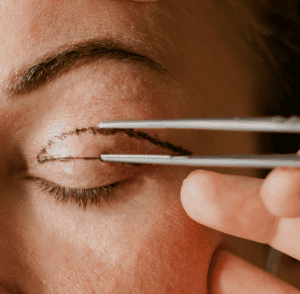
Does eyelid correction always have to involve traditional surgery?
Blepharoplasty has long been one of the most commonly performed facial procedures. It is traditionally associated with the surgical removal of excess skin and the reshaping of tissues around the eyes.
At the same time, technological advances are driving growing interest in procedures that use radiofrequency (RF) energy, which allow for minimal tissue damage during cutting with high-frequency current (4 MHz) and are in line with the trend toward minimally invasive treatment methods.
Although the scope of application and treatment technique depend on the specific procedure and the patient’s eligibility, radiofrequency is increasingly being discussed in the context of modern approaches to treatments involving delicate skin structures.
Why does the area around the eyelids require special precision?
The skin of the eyelids is among the thinnest structures in the human body.
This is an area where not only the aesthetic result is important, but also the precision of the procedure, control over the amount of energy delivered, and minimizing the impact on surrounding tissues.
In clinical practice, this means striking a balance between:
- the effectiveness of the procedure,
- the predictability of the effect,
- tissue safety,
- a comfortable recovery.
This is precisely why thermal cutting technologies based on high-frequency current are attracting increasing interest in minimally invasive procedures.
Radiofrequency—Why Does the Method of Energy Delivery Matter?
Radiofrequency technologies use high-frequency energy to exert a controlled effect on tissues with minimal damage to surrounding tissues.
However, what is of key importance is not the generation of energy itself, but the way it is delivered and monitored during the procedure.
Modern solutions increasingly incorporate mechanisms that limit excessive thermal effects and adapt the procedure to the tissues’ current response.
This approach can help make the procedure more predictable and provide better control over the operator’s work.
How does Eltron 160 HF technology fit into this trend?
An example of a solution that uses radiofrequency technology is Eltron 160 HF.
The system supports bipolar technology and uses a mechanism to monitor tissue impedance during energy delivery. This means that the device analyzes the tissue’s response and reduces the risk of excessive thermal damage by automatically terminating the coagulation process (biofeedback).
In addition, the system uses visual and audible signals to assist the operator during the procedure. According to the manufacturer, the solution was designed to deliver RF energy precisely and in a controlled manner.
It is precisely these trends in technological development that demonstrate how important it is in modern procedures not only to achieve the desired treatment outcome, but also to consider how the tissue is handled.
Will radiofrequency replace traditional blepharoplasty?
There is no single method that is suitable for every patient.
The choice of procedure depends, among other things, on:
- the degree of tissue laxity,
- the anatomy of the eye region,
- the expected result,
- medical license,
- clinical indications.
However, alongside traditional surgical techniques, solutions that utilize controlled energy are becoming increasingly common, with the aim of improving surgical precision and tailoring treatment to individual patients.
Summary
Blepharoplasty and procedures performed in the eyelid area are among the procedures that require particular precision.
The development of radiofrequency technologies shows that, in the modern approach, not only the end result but also the control of the energy delivered to the tissues is playing an increasingly important role.
That is precisely why solutions based on monitoring tissue responses—such as Eltron 160 HF —are in line with the trend toward modern, minimally invasive procedures.