Magnification and Resolution in Videodermatoscopes
Does a higher magnification mean better diagnostics?
When choosing a videodermatoscope, some of the first specifications we look at are image resolution and available magnification.
It’s only natural—a higher megapixel count and the ability to see more detail seem to directly translate into better diagnostic quality.
In clinical practice, however, the situation is more complex.
Today, modern videodermatoscopy is not just about the quality of a single image, but about the entire imaging process—from how the image is captured, through its analysis, to documentation and the ability to compare changes over time.
Resolution is just the beginning
High resolution is important, especially when evaluating fine structures and documenting skin changes.
However, a technical parameter alone does not guarantee better diagnostic performance.
The final image quality is also influenced by:
- optical quality,
- type of lighting,
- the ability to operate in various lighting modes,
- ergonomics of the study,
- speed of document preparation,
- the ability to compare photos over time.
That is why two devices with similar resolutions can, in practice, offer completely different user experiences.

Why is image consistency so important?
Skin diagnosis isn’t just about taking a good photo.
It is equally important to be able to take another photo under the same conditions—a few months later or during the next checkup.
The following factors are important in patient monitoring:
- the same patient position,
- replicable lighting,
- repeatable optical alignment,
- a constant distance from the area under investigation,
- quickly locating the site of the lesion,
- the ability to compare images directly.
That is precisely why modern videodermatoscopy systems are increasingly integrating clinical and dermatoscopic imaging and documentation into a single work environment.
IntelliStudio —When a Videodermatoscope Becomes a Diagnostic System
IntelliStudio was designed not as a single camera, but as a complete environment for dermatological imaging.
The system supports:
- quick creation of full-body documentation,
- automation of the imaging process,
- standardization of the patient’s position,
- comparing changes over time,
- integration of clinical and dermatoscopic images.
This allows the doctor to spend less time on paperwork and focus on analyzing the images.
In practice, it is particularly important to combine image quality with the ability to use the images later during subsequent visits.
D2 Camera —the same technology, even outside the full system
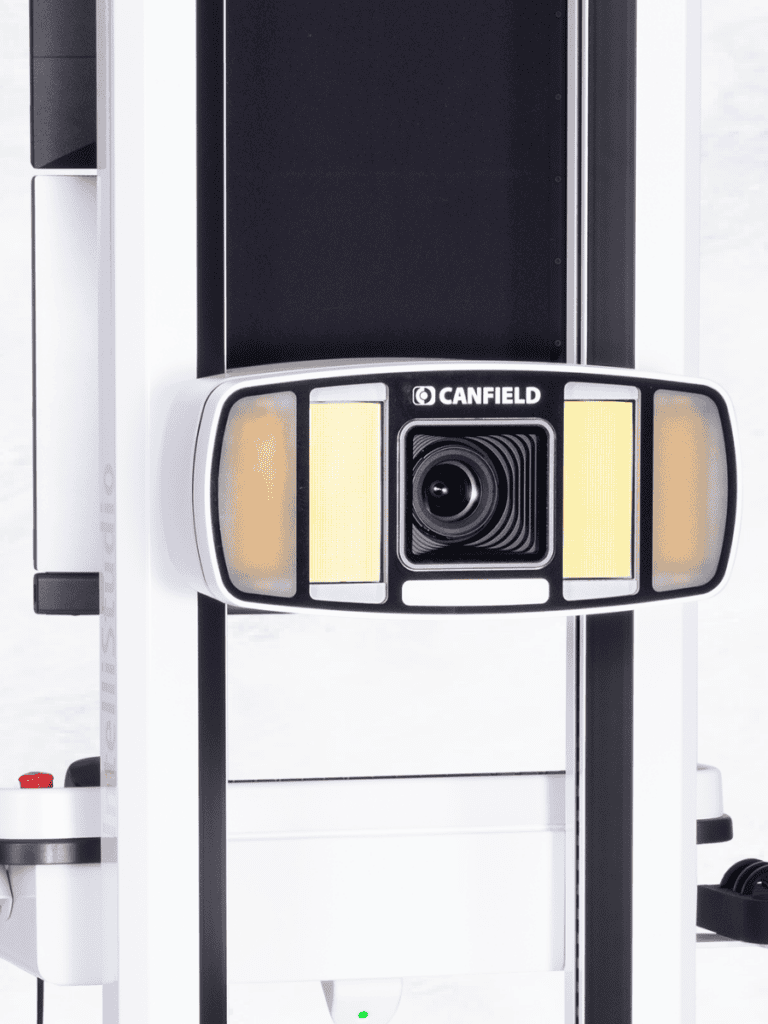
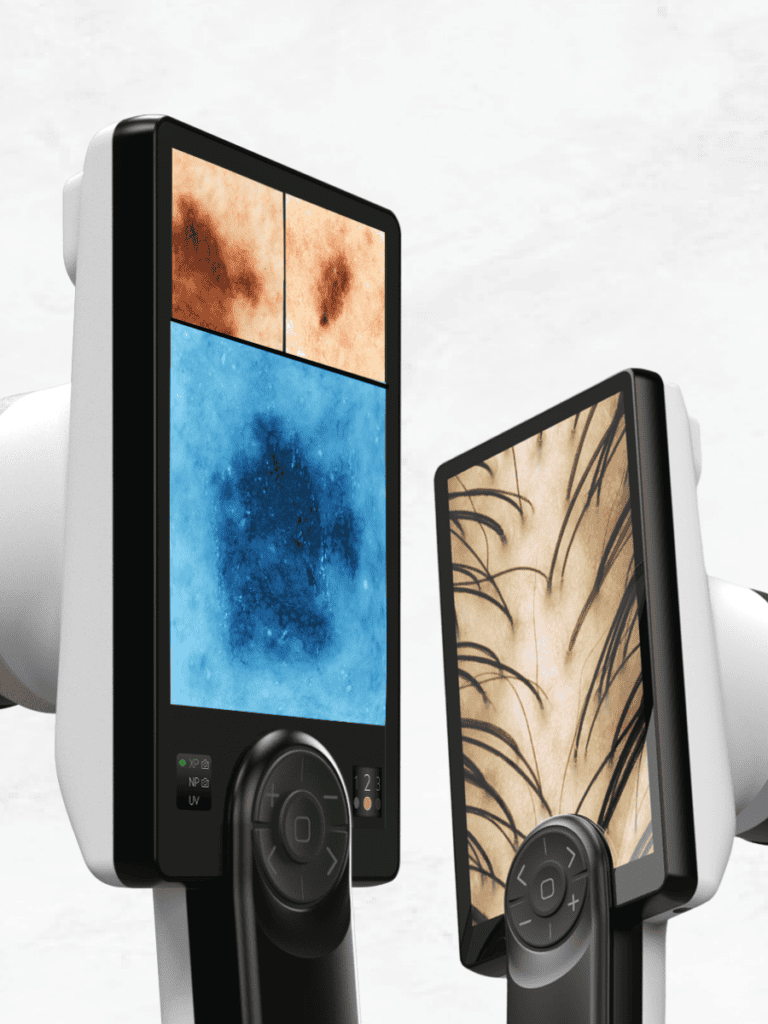
One of the components of IntelliStudio is the D2 camera, which can function both as part of a complete system and as a standalone videodermatoscope.
This solution is particularly appealing to practices that want to start using digital dermatoscopy without implementing full-body mapping.
The D2 camera combines:
- polarized light imaging,
- imaging in unpolarized light,
- UV mode,
- sequential photos,
- large touchscreen,
- live image preview,
- clinical and dermatoscopic image documentation.
The large screen allows you to assess more details during the examination and makes it easier to compare images without having to transfer them to another workstation.
When Is Dermoscopy Alone Not Enough?
For centers that conduct regular mole screenings or provide care for high-risk patients, whole-body imaging is becoming increasingly important.
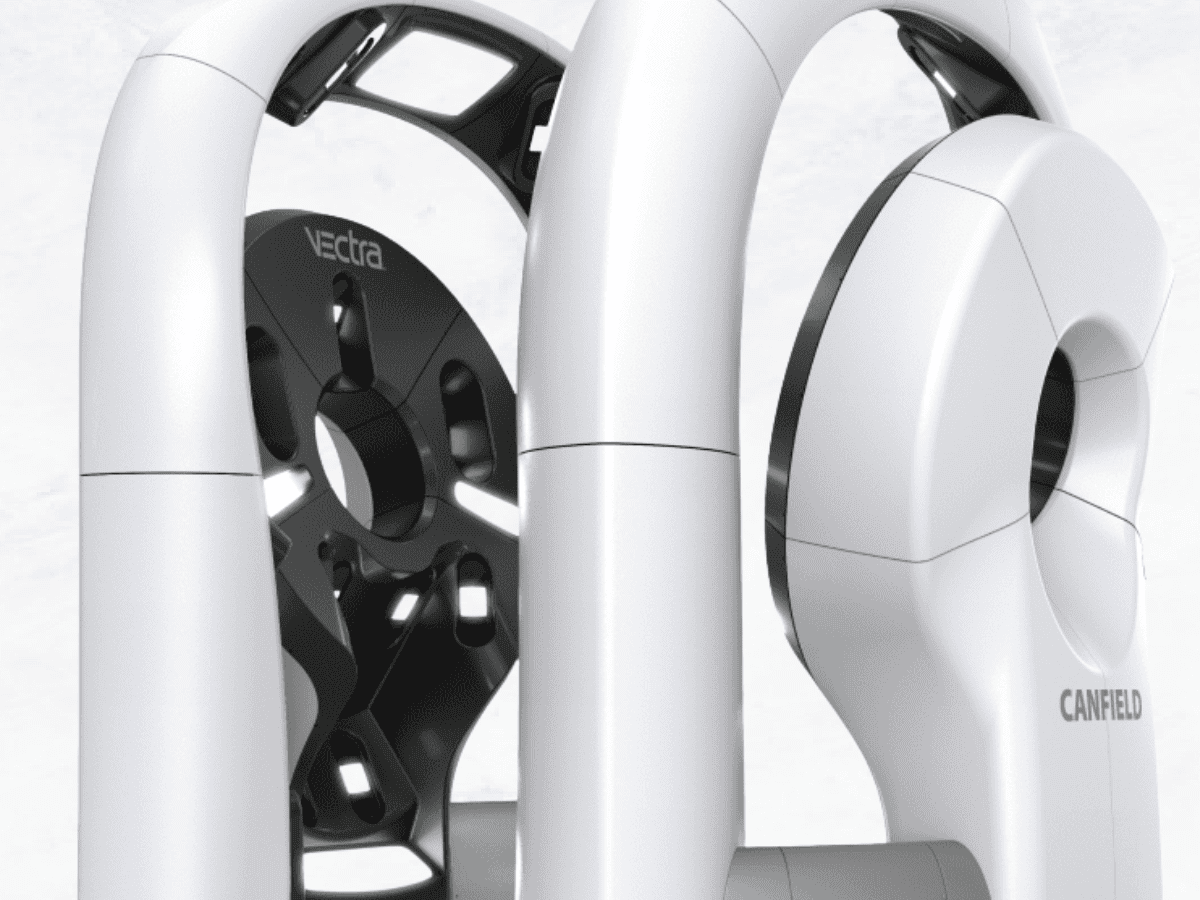
This is where solutions such as Vectra WB360come into play, enabling the automatic capture of images of the entire skin surface and supporting long-term monitoring of changes.
Combining full-body imaging with dermatoscopic documentation allows us to move from analyzing a single mole to a comprehensive assessment of the patient.
This approach is particularly valuable in modern dermato-oncology and patient monitoring programs.
Summary
Resolution and magnification remain important parameters of a videodermatoscope—but they are no longer the only factors affecting the quality of diagnosis.
The following are playing an increasingly important role:
- imaging reproducibility,
- speed of documentation,
- work ergonomics,
- the ability to operate in various lighting modes,
- data integration and monitoring of changes over time.
It is precisely this combination of features that makes a modern videodermatoscope not just a device for taking photos, but a comprehensive tool that supports skin diagnostics.